

What Is The Minimum Investment For The Golden Visa – Find Out The Requirements Now!
January 22, 2026
How Data-Driven Approaches Are Shaping Modern Workforce Management
January 23, 2026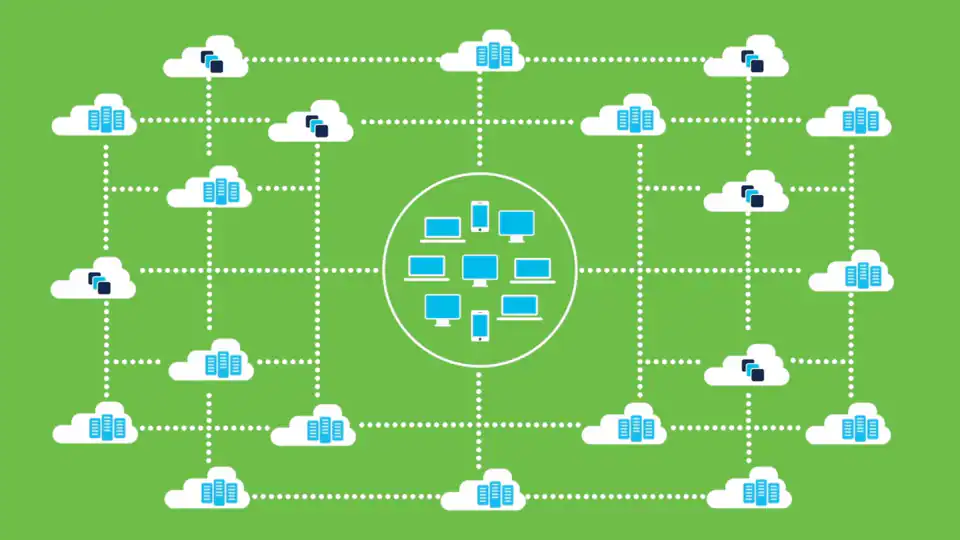
Key Takeaways
- SD-WAN delivers substantial cost savings and operational flexibility compared to traditional networking approaches.
- The technology enhances overall application performance and ensures superior user experiences.
- Enterprises benefit from straightforward and secure cloud integrations via SD-WAN.
- SD-WAN is pivotal for supporting the rise of remote and hybrid work environments.
As digital transformation accelerates, enterprises are reevaluating their network strategies to enhance efficiency, agility, and resilience. One technology at the forefront of this evolution is software-defined WAN technology for modern enterprise networks, which empowers organizations to optimize connectivity as never before. SD-WAN shifts network management from legacy hardware setups to intelligent software control, enabling businesses to meet the complex demands of cloud computing, remote work, and global expansion seamlessly.
By decoupling network control from underlying physical infrastructure, SD-WAN offers organizations unprecedented visibility and command over their locations, devices, and applications. This means enterprises can quickly adapt network policies, troubleshoot bottlenecks, and secure connections across all endpoints, ensuring that business operations keep pace with ever-shifting market needs.
With SD-WAN, businesses are well-positioned to address the limitations of their legacy networks directly. Whether it’s eliminating the high costs and rigidity associated with traditional MPLS circuits or empowering teams globally with reliable application performance, modern enterprises need the ability to scale and secure their networks dynamically. SD-WAN delivers on this front with centralized management, real-time responsiveness, and end-to-end connectivity.
As organizations modernize, it’s crucial to choose solutions that streamline operations and foster innovation. According to ZDNet, leveraging SD-WAN alongside cloud and security investments positions businesses to thrive in today’s distributed work environments.
Understanding SD-WAN
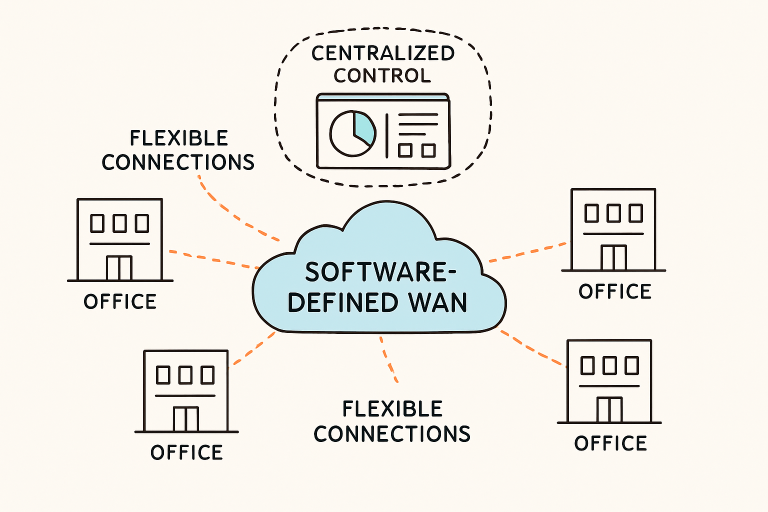
Software-Defined Wide Area Networking (SD-WAN) is a transformative approach that virtualizes network control, enabling policy-based management across various connectivity paths—such as broadband, LTE, and MPLS. Through centralized controllers, SD-WAN intelligently manages data traffic, automatically rerouting it via optimal channels based on performance requirements, thereby reducing latency and ensuring that bandwidth-intensive applications receive top priority.
Unlike older WAN models that tie organizations to rigid connections, SD-WAN leverages multiple underlay networks, offering flexibility to scale as business needs evolve. It also empowers IT teams by abstracting complex configurations, simplifying deployment and management across all endpoints.
Cost Efficiency and Flexibility
Cost remains one of the primary considerations in managing an enterprise network. Traditional WANs, particularly those relying solely on MPLS, lock businesses into expensive contracts with limited adaptability. SD-WAN solutions, however, enable organizations to blend less costly broadband lines with existing MPLSlinks, achieving reliability while slashing costs—sometimes by up to 50%, according to data featured in Cisco’s SD-WAN insights.
The dynamic path selection of SD-WAN ensures real-time failover and path optimization, allowing essential services to remain up even during outages or congestion. As bandwidth demands fluctuate, IT teams can instantly adjust resources without the need for physical rewiring or complex vendor negotiations. This level of flexibility puts businesses in control of their connectivity, supporting rapid expansion and flexible working arrangements.
Enhanced Application Performance
As enterprises increasingly rely on real-time communication, cloud applications, and SaaS models, optimizing application performance has never been more crucial. SD-WAN analyzes and classifies traffic, ensuring that mission-critical applications receive priority and are routed over the highest-performing paths. For example, major global logistics companies, such as DHL, reported a decrease of up to 35% in application downtime after rolling out SD-WAN at scale. This change directly improved supply chain coordination and customer satisfaction.
By monitoring network health and employing application-aware routing, SD-WAN minimizes latency and jitter, making it ideal for latency-sensitive services such as video conferencing, VoIP, and ERP systems.
Seamless Cloud Integration
Many modern enterprises are migrating workloads to public, private, and hybrid cloud environments. Traditional WANs often backhaul all traffic through a central data center before reaching the cloud, introducing extra steps, delays, and complexity. SD-WAN addresses these challenges by enabling secure, direct connections between users and cloud services, significantly reducing latency and simplifying network architectures.
With direct cloud integration powered by SD-WAN, organizations can enhance the employee experience by delivering faster, more reliable access to Microsoft 365, Salesforce, Google Workspace, and other key SaaS tools that drive a competitive advantage.
Supporting Remote and Hybrid Workforces
The global rise of remote and hybrid work arrangements has made secure and reliable network access from any location a must-have for operational efficiency. SD-WAN ensures that employees receive consistent application performance and strong security controls, regardless of their location. This technology centralizes policy enforcement and zero-trust approaches, fortifying endpoints without slowing business operations.
Enterprises can adapt to rapid workforce shifts and empower their teams to be productive anywhere without concerns about unsecured Wi-Fi, slow connections, or manual configuration headaches.
Security Considerations
While SD-WAN represents a significant leap forward in functionality and manageability, its deployment must be accompanied by robust security strategies. Many organizations are integrating SD-WAN within Secure Access Service Edge (SASE) architectures, combining next-generation firewalls, secure web gateways, cloud access security brokers, and zero-trust network access—all as cloud-native services. This holistic approach bolsters threat detection and mitigation without creating silos or complicating management, aligning IT efforts with the realities of hybrid work.
The tight integration of networking and security platforms ensures enterprises can meet stringent regulatory and privacy requirements while efficiently scaling their operations.
Future Outlook
As digital transformation journeys accelerate worldwide, SD-WAN adoption is projected to reach unprecedented heights, with the market estimated to hit $21.67 billion by 2030. Enterprises seeking agile, secure, and cost-efficient network solutions will continue to favor SD-WAN for its adaptability in the cloud-centric, distributed workforce era. Through ongoing innovation, SD-WAN will further integrate with AI-driven analytics, IoT connectivity, and security platforms, underpinning ongoing business success.
In summary, SD-WAN has emerged as a pivotal technology for enterprises undertaking network modernization initiatives. By intelligently managing traffic across multiple connections, it optimizes performance while reducing reliance on expensive traditional WAN infrastructure. SD-WAN also strengthens security through integrated protections, supports seamless scalability as business needs evolve, and offers greater visibility and control over network operations. This combination of cost efficiency, reliability, and adaptability allows organizations to transform their networks from simple connectivity tools into strategic assets that actively support business objectives. Ultimately, adopting SD-WAN helps enterprises future-proof their digital operations and stay competitive in a rapidly evolving technological landscape.
- Advances in Spinal Cord Stimulation Techniques for Pain Relief
- How Data-Driven Approaches Are Shaping Modern Workforce Management
- How SD-WAN Is Transforming Enterprise Connectivity
- What Is The Minimum Investment For The Golden Visa – Find Out The Requirements Now!
- Common Reasons UAE Banks Delay Business Account Approval – Find Out Why!