

What Drives Participation in Clinical Research?
February 5, 2026
The Science Behind Crowns
February 10, 2026Key Takeaways
- Personalized digital experiences are crucial for client satisfaction and loyalty.
- Data-driven insights and AI technologies enable scalable personalization.
- Implementing advanced tools, such as virtual assistants, can enhance client engagement.
The wealth management landscape is undergoing a rapid transformation as technology becomes central to client engagement and service delivery. Today’s clients are digitally savvy and expect services that are not only efficient but also tailored specifically to their financial goals and lifestyle. Technology is empowering advisors and firms to deliver dynamic, personalized experiences that deepen client loyalty and drive long-term results. The introduction of sophisticated tools, such as an investment management CRM, provides wealth firms with new capabilities to understand and serve clients on an individual level.
Personalization in digital channels is no longer a differentiator; it has evolved into a basic expectation. According to a McKinsey & Company report, 71% of consumers expect personalization, and 76% get frustrated when it doesn’t occur. For wealth management firms, this signals a need to move away from generic communication and shift towards a thoughtful, data-driven approach to each client’s journey. Let’s explore the essential strategies for creating the bespoke digital experiences modern investors now demand.
Understanding Client Expectations
Wealth management clients are seeking digital solutions that reflect their individual goals, values, and risk appetites. The rise in demand for hyper-personalized guidance is well-documented. A recent study by J.D. Power found that nearly half of investors now expect financial advice and insights delivered through digital channels, in a way that feels tailored and timely. To stand out from competitors, firms must move beyond simple online account access and deliver comprehensive, contextual, and anticipatory service at every digital touchpoint.
This new level of engagement requires firms to get to know their clients more deeply. Firms that can adapt and deliver in this area will not only attract new clients but also retain their most valuable relationships for years to come.
Leveraging Data for Personalization
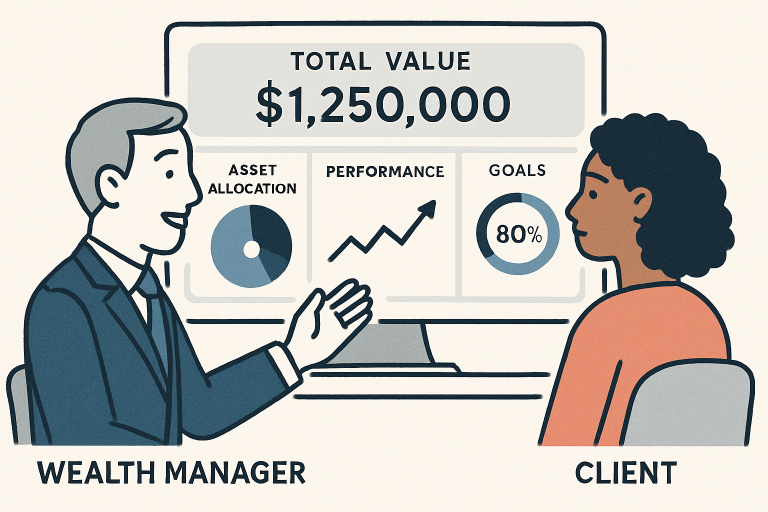
The backbone of any successful personalization strategy is data. Wealth management firms have access to vast quantities of information, from financial profiles and transaction histories to digital behaviors and preferences. By aggregating and analyzing this data, advisors can achieve a holistic view of the client and provide better recommendations and individualized solutions.
Advanced analytics platforms and CRM systems synthesize multi-channel data to uncover trends and signals that might otherwise go unnoticed. When data is unified and readily accessible, advisors can deliver timely insights that feel relevant and specific to each client. This approach increases engagement and strengthens client trust, fostering loyalty in a competitive marketplace.
Implementing AI and Machine Learning
Artificial Intelligence (AI) and machine learning are playing a crucial role in scaling personalization without sacrificing the human touch. These tools enable wealth management firms to process vast amounts of client data and identify subtle patterns in behavior, preferences, and life events. For example, AI can alert clients to relevant investment opportunities, help automate portfolio rebalancing, or predict when a client may need to speak with an advisor about a significant financial decision.
AI-powered platforms can also deliver predictive insights and proactive guidance, keeping clients informed with content and recommendations that align with their real-time needs. By combining the analytical power of machines with the empathetic skills of human advisors, firms can offer well-rounded, personalized experiences that deliver real value.
Enhancing Digital Platforms
The user experience across digital channels has a profound impact on client engagement and satisfaction. Modern investors expect streamlined interfaces, intuitive navigation, and seamless access to their portfolios across devices. Enhancing client-facing websites and applications with features such as real-time analytics dashboards, interactive educational tools, and personalized content helps firms stand out from the competition.
Firms are increasingly adopting virtual assistants and chatbots to answer questions on the spot, book meetings, or provide market updates. These enhancements reduce friction, empower self-service, and keep clients engaged around the clock. Consumer satisfaction regarding digital platforms is at an all-time high when tools are simple, secure, and tailored to individual needs.
Ensuring Data Security and Privacy
As digital personalization strategies expand, so too do the risks surrounding data privacy and cyber threats. Clients entrust advisors and wealth firms with significant amounts of sensitive information, and any breach can erode hard-earned trust. Therefore, wealth managers should maintain strict data governance practices, adhere to industry regulations, and implement advanced cybersecurity protocols. Transparent data usage policies and clear communication reassure clients that their privacy is respected and protected.
Training Advisors for a Digital-First Approach
Human advisors continue to play an essential role in the digital age, serving as trusted partners who can interpret data and provide reassurance in times of uncertainty. By investing in ongoing digital skills training, wealth management firms ensure their advisors know how to use modern CRM, analytics, and engagement platforms to maximum effect. This empowers advisors to anticipate client needs, initiate meaningful conversations, and offer tailored solutions quickly and confidently.
Measuring Success and Adapting Strategies
Successful personalization initiatives are continuously measured and refined. Key performance indicators such as client satisfaction scores, engagement rates, digital adoption metrics, and retention rates are critical to tracking progress. Using these insights, firms can fine-tune their strategies, ensuring they remain responsive to changing client expectations and technological innovations. Regularly soliciting client feedback through surveys and platform analytics further helps firms make data-driven improvements to their personalization efforts.
Personalized digital experiences are no longer optional in wealth management; they are an essential driver of client engagement, trust, and loyalty. By harnessing data, deploying AI-driven solutions, enhancing digital platforms, prioritizing security, upskilling advisors, and committing to ongoing measurement and improvement, wealth management firms will be best positioned to meet the rising expectations of today’s investors and secure long-term success.
- Kasyno Boomerang na Polskim Rynku – Funkcje Platformy i Doświadczenie Użytkowników
- Boomerang Casino PL – Automaty do Gry i Gry Stołowe
- Aphrodite på den svenska marknaden – hur du skapar ett konto och kommer igång
- Aphrodite på den svenska marknaden – hur du skapar ett konto och kommer igång
- Aphrodite på den svenska marknaden – hur du skapar ett konto och kommer igång